 Studios
-
 Support
 -
 Contact us
 -
 News
News -
 Products
 -
0
 Cart
Cart

Studios
Support
Contact us
News
Products
Cart 
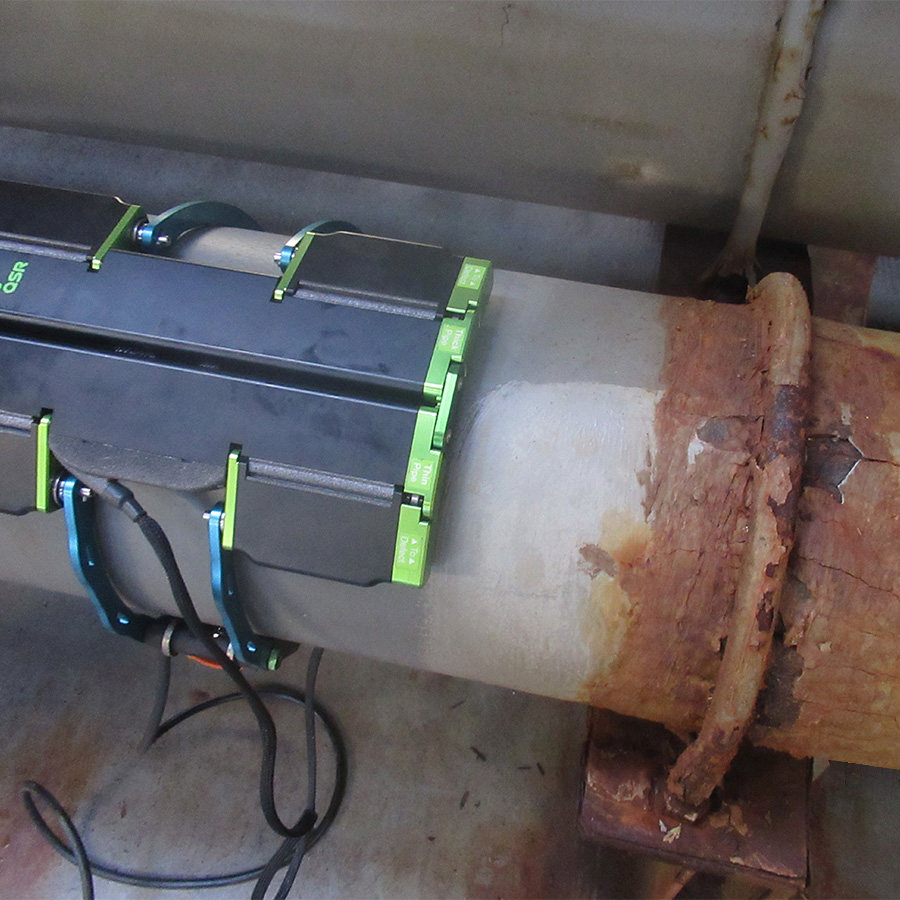
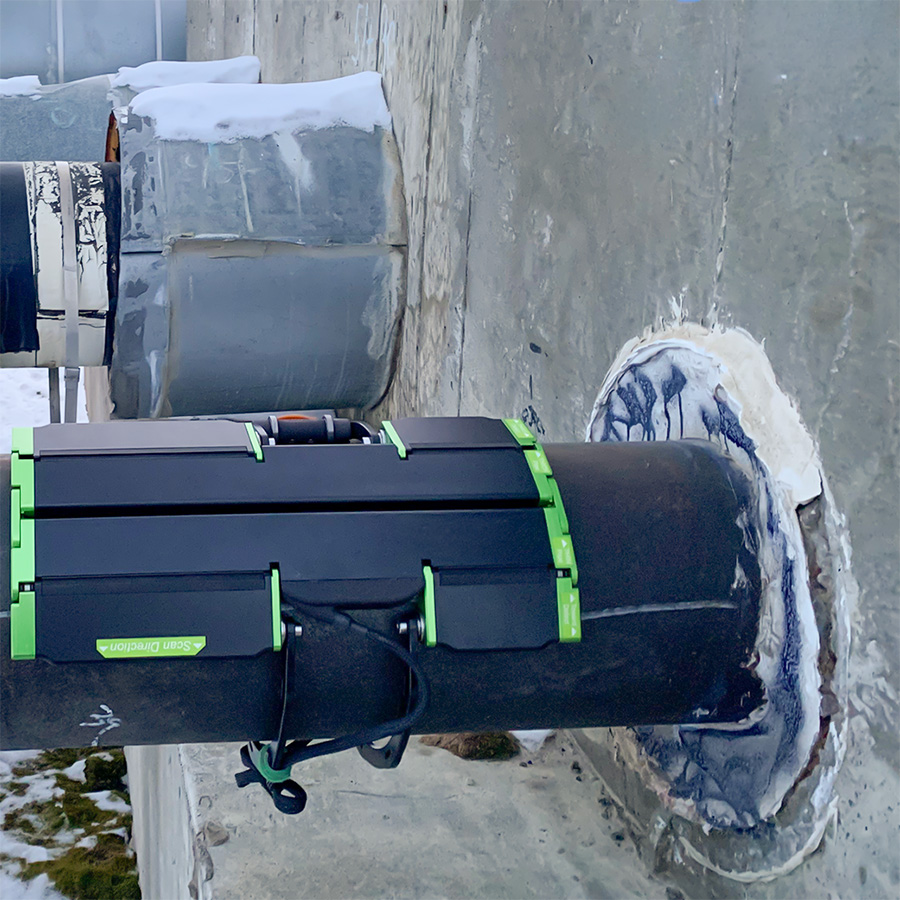
QSR® Axial extends guided wave scanning to locations where the area of interest cannot be assessed using circumferential wave propagation, such as corrosion beneath clamped supports or at embedded wall penetration interface. Instead of sending waves around the pipe, the scanner runs alongside the feature, using axial propagation to assess the pipe wall ahead of the sensor. Sensor positioning ensures the area beneath the obstruction is included within the inspection area.
Using the same QSR® ePOD electronics, a dedicated low‑profile Axial Sensor — incorporating both transmitter and receiver sections — and a Traction Unit, enable quantitative wall thickness measurement in areas otherwise inaccessible to inspection.
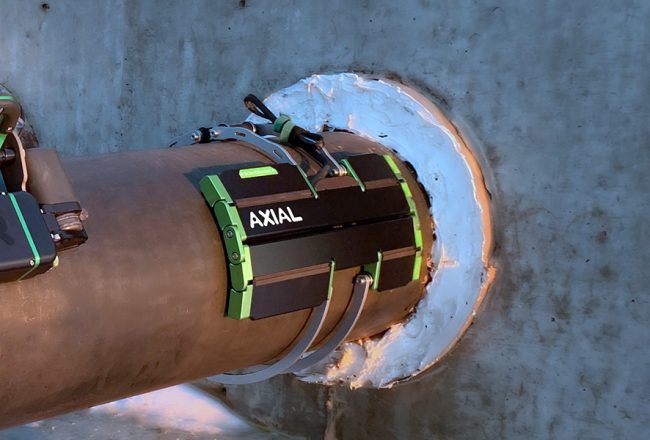
Clamped Supports
Earth/ Wall Penetrations
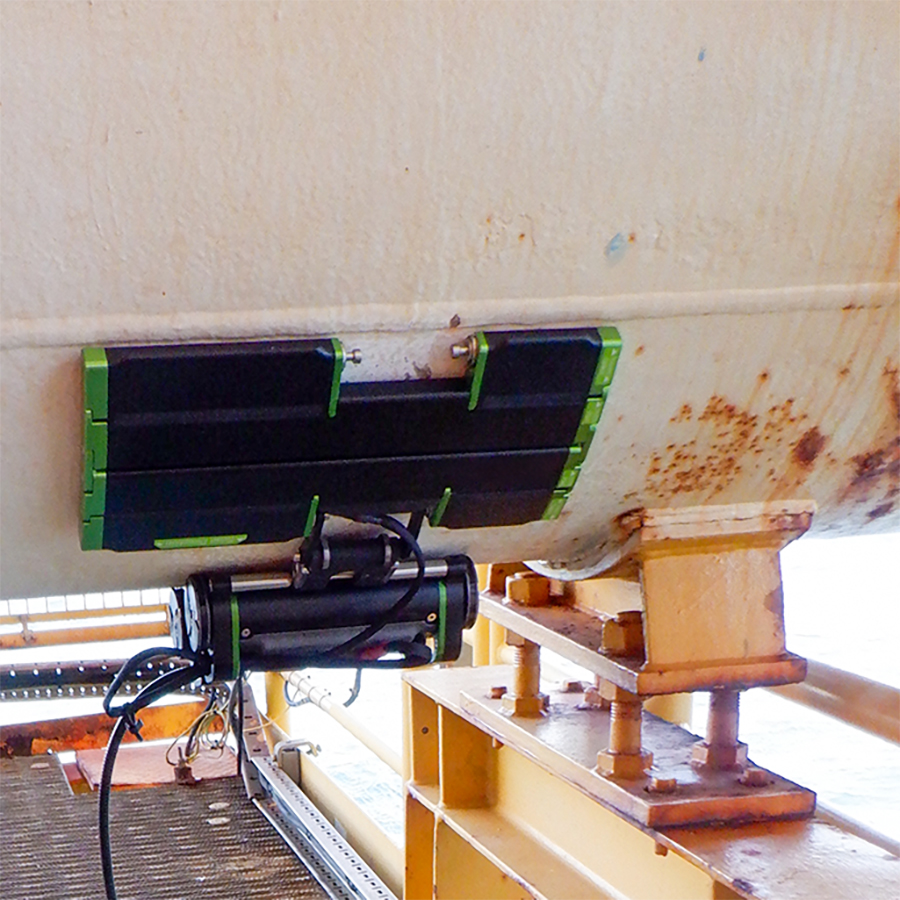
Saddle Support
Scab Patch
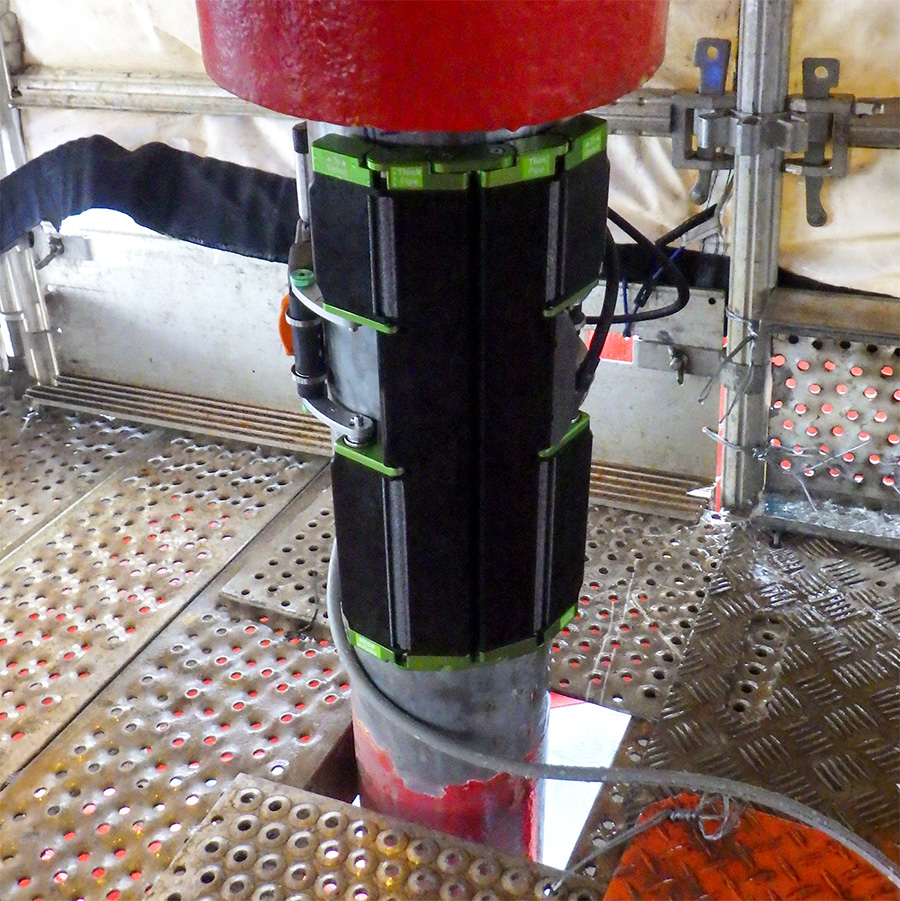
QSR® Axial is used where the scanner is required to run alongside the feature, assessing wall thickness in the area of interest without removing or disturbing the feature.
Typical applications include:
Welded supports or fully circumferentially welded saddle supports are not included, as welds introduce strong reflections that dominate the response and obscure the results.
Where scanning from the side is not practical, QSR1® can evaluate the pipe wall at the feature location through circumferential wave propagation.
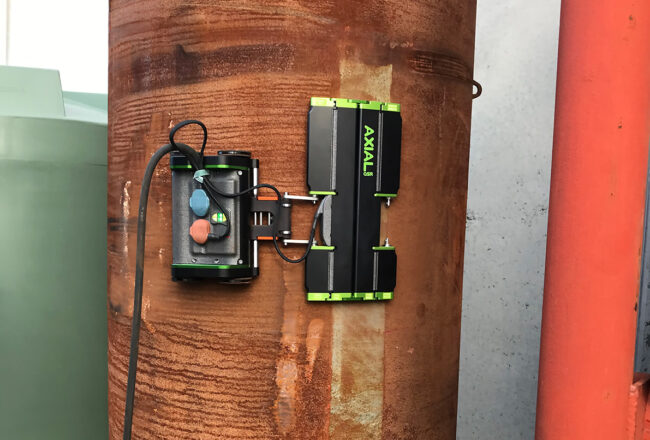
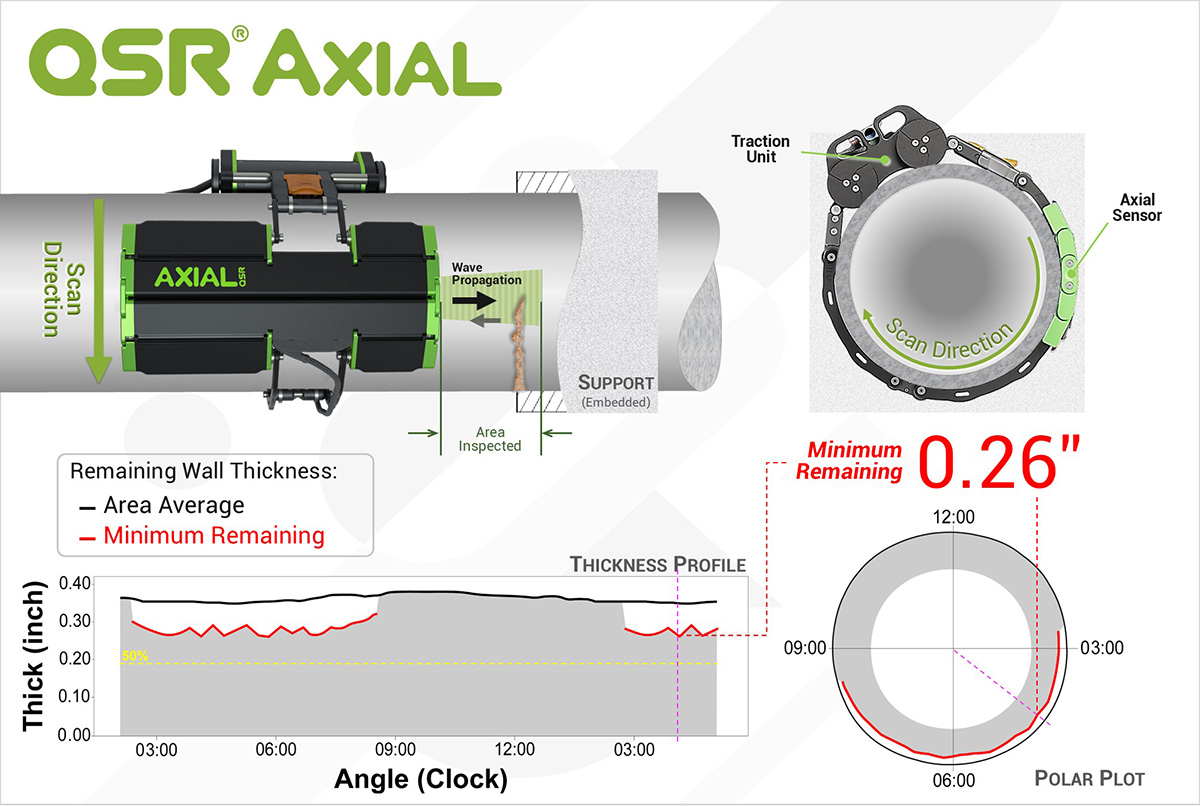
At each scan position, the transmitter section of the axial sensor generates shear horizontal (SH) guided waves that propagate along the pipe axis, beyond the obstruction.
The receiver section captures the returning signals, which are processed to determine the average and the minimum remaining wall thickness within the inspection zone ahead of the sensor. The inspection zone typically extends 5‑50 cm, depending on configuration and setup.
Scan configuration, data acquisition and analysis are all controlled by the WaveProQSR™ software installed on a computer connected to the QSR® ePOD via Ethernet or USB.


