Studios
-
 Support
 -
 Contact us
 -
 News
News -
 Products
 -
0
 Cart
Cart

Studios
Support
Contact us
News
Products
Cart 
QSR1® introduced the Quantitative Short Range technique to the field of Non‑Destructive Testing (NDT). As the first guided wave scanning instrument, it made possible to measure wall thickness in areas where direct access is not available.
Developed around the challenge of quantifying Corrosion Under Pipe Supports (CUPS), QSR1® established a practical means to quantitatively assess the pipe‑to‑support contact area without access to the underside of the pipe, which is required by other methods.
The same approach is now applied across the QSR® System, extending beyond pipe supports to a wider range of features.
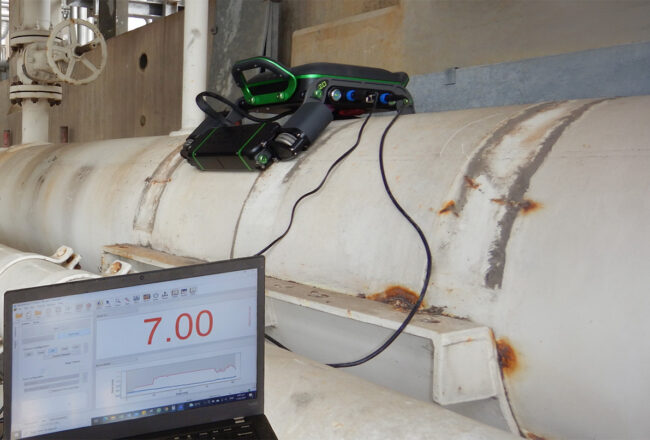
Metal Support
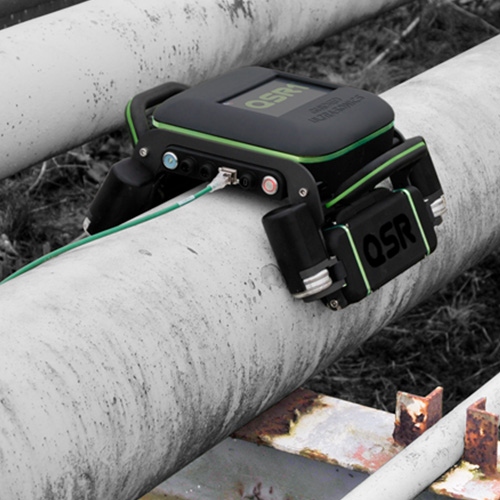
Concrete Support
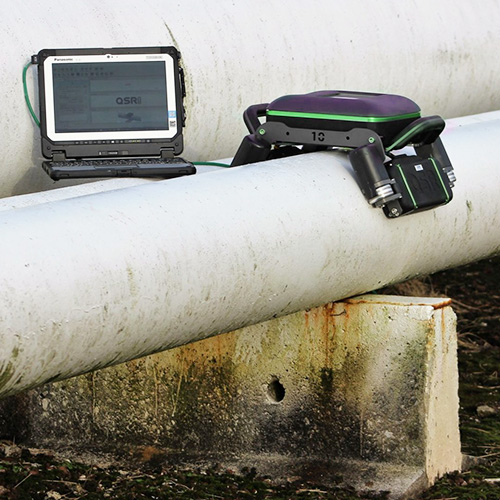
Saddle Support
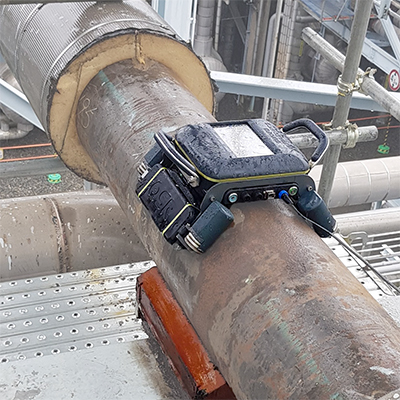
Scab Patch
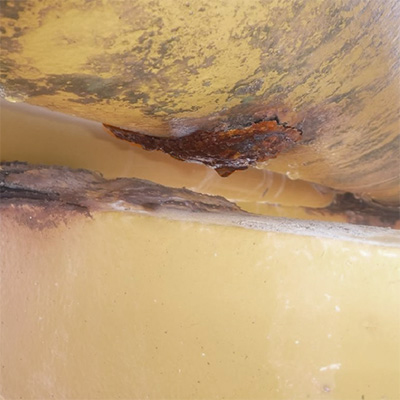
QSR1® is used to determine the condition of pipe wall areas obscured by external features, without removing or disturbing those features.
Typical applications include, among others:
Welded simple supports or fully axially welded saddle supports are not included, as the weld introduces strong reflections that dominate the response and obscure the results.
For geometries where circumferential access is not available, QSR® Axial enables scanning from the side of the area of interest.
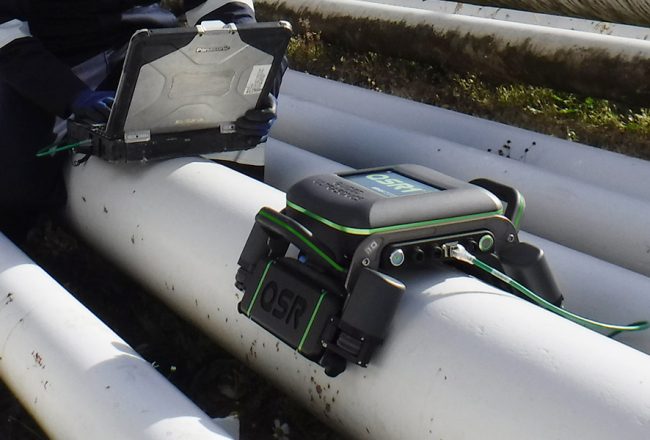
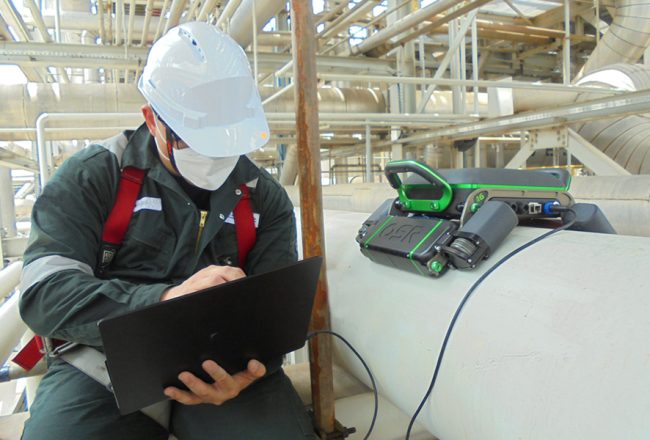
See how QSR1® quantifies remaining wall thickness in areas with CUPS without removing the support or interrupting operation, demonstrated here on an NPS 10 Schedule 40 pipe with two artificially introduced external defects and one internal corrosion defect.
A Level 2:QT inspector sets up the system, runs the “Auto Configure”, starts an “Auto Scan”, and processes the results to verify remaining wall thickness at the defect locations.