 Studios
 Support
  Contact us
  News
News  Products
  Cart
Cart 
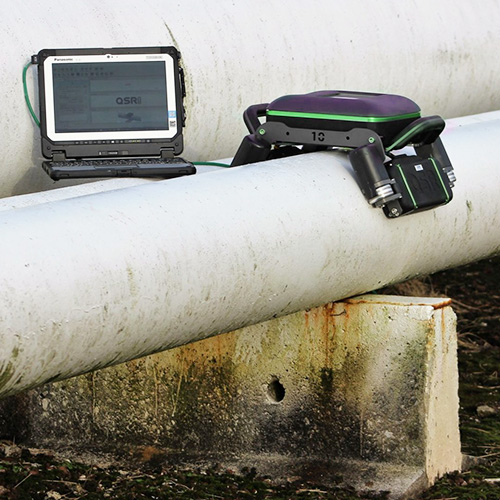
Scanning for quantitative integrity assessment
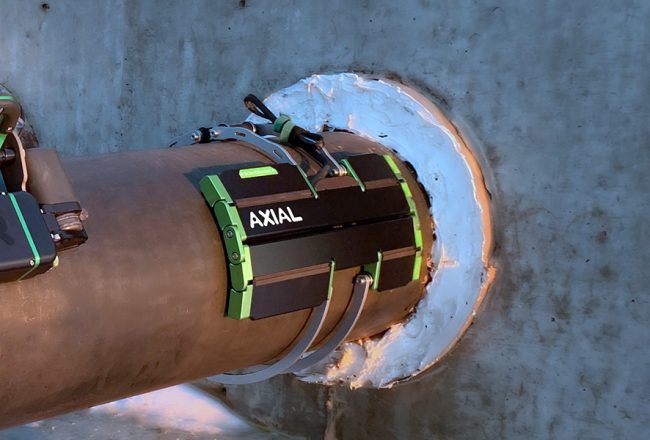
Guided wave scanning measures remaining wall thickness at locations where direct access is not possible, such as pipe supports and embedded sections, enabling evaluation of condition from a nearby position.
Where screening identifies areas of concern, guided wave scanning provides quantitative wall thickness data. Applied as a follow‑up to screening or as a targeted assessment, it enables operators to confirm degradation severity, prioritise intervention, avoid unnecessary intervention, and make informed maintenance decisions.
Scanning Technology
Guided wave scanning technology builds on the principles of the Guided Wave Testing (GWT) method, adapted for localised measurement.
The test is performed using the QSR® (Quantitative Short Range) technique, a patented technology developed by GUL for wall thickness measurement without direct contact with the area of interest.
QSR® uses specially designed EMAT sensors to introduce guided waves into the pipe material from an accesible position. A frequency‑based analysis of the response signals determines the average and remaining wall thicknesses within the scanned region.
The result is a wall thickness profile across the inspected section, providing a quantitative basis for proportionate decisions based on measured condition.
Designed for Field Deployment
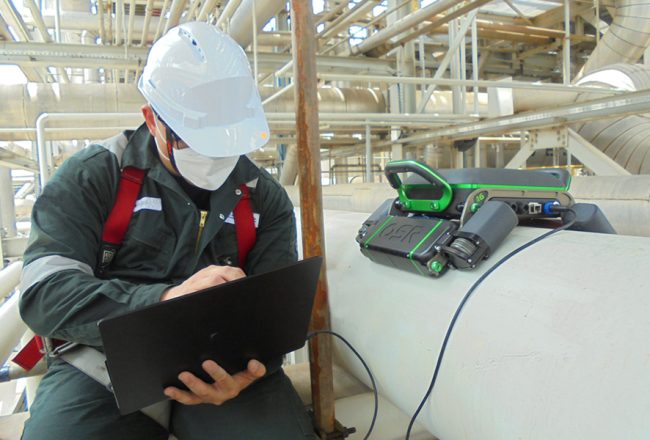
Scanning systems must be practical to deploy on site while maintaining consistent performance. Key design characteristics include:
- Rugged construction suited to industrial environments
- Ease of handling and positioning during deployment
- Controlled sensor movement along the inspection path
- Applicability across a range of pipe sizes and operating conditions
- Minimal surface preparation at the inspection location
The QSR® System delivers these characteristics in practice, enabling reliable thickness evaluation at critical features previously assessed only qualitatively.
From Screening to Quantification
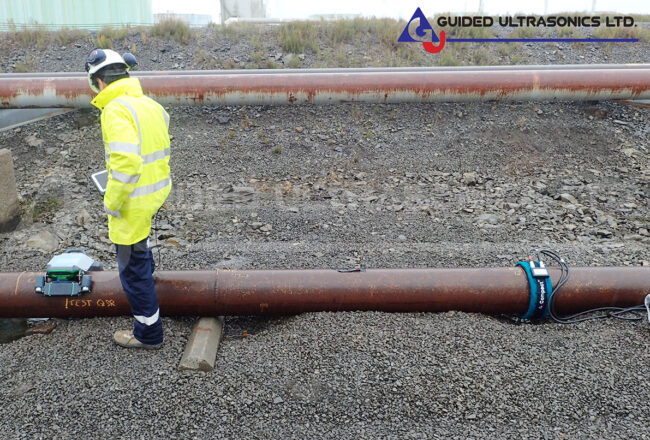
Scanning is typically applied as a follow‑up to screening, focusing on locations where further evaluation is required. While scanning provides detailed wall thickness at specific features, guided wave screening enables rapid assessment over extended lengths to identify where inspection effort should be directed.
Together, they form a complementary approach to pipeline integrity, enabling more efficient inspection programmes that prioritise areas of concern.


