 Studios
-
 Support
 -
 Contact us
 -
 News
News -
 Products
 -
0
 Cart
Cart

Studios
Support
Contact us
News
Products
Cart GUL Screening is based on the fundamental torsional guided wave mode T(0,1) because it provides the most reliable inspection performance.
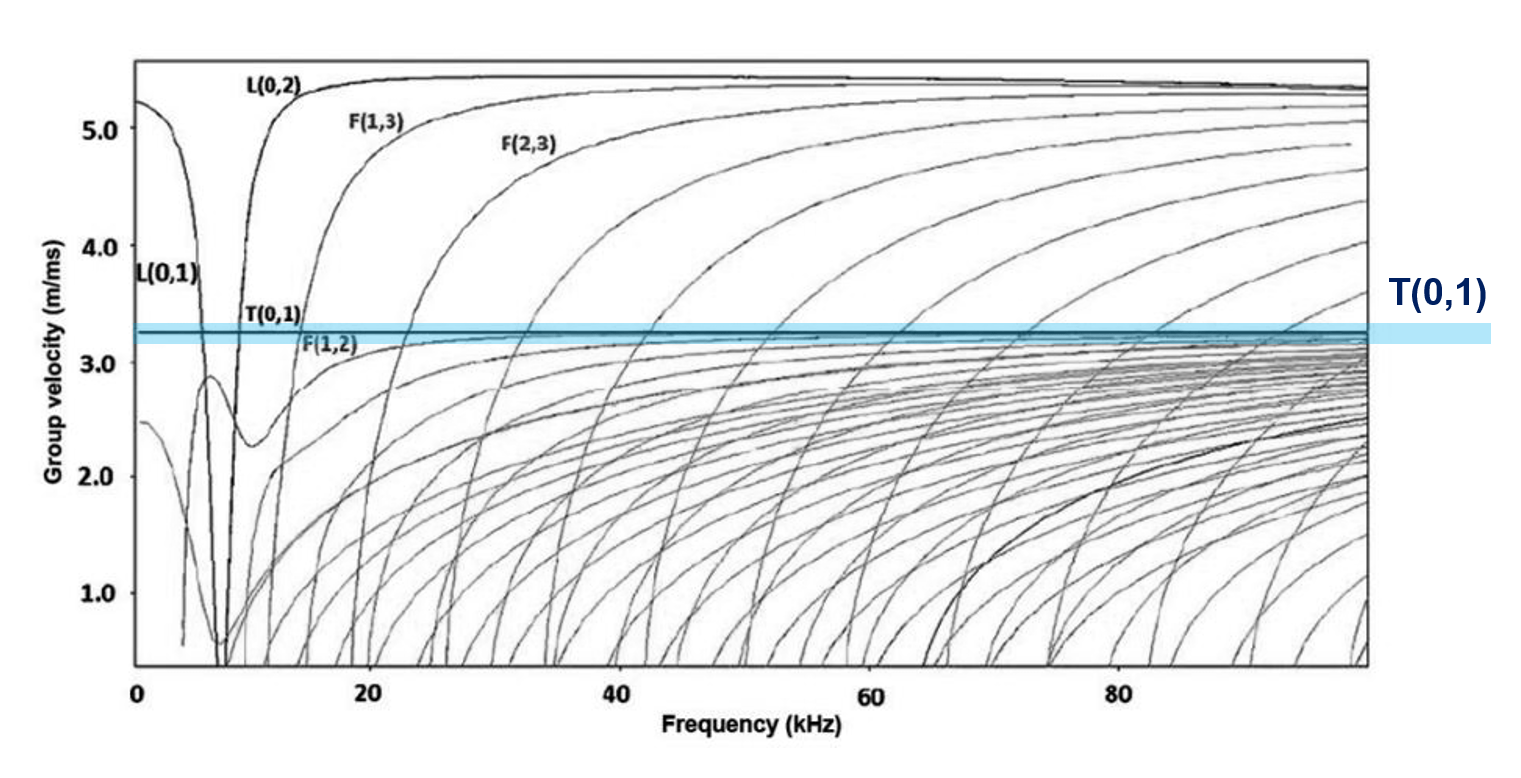
These advantages help to reduce inspection complexity, give higher signal‑to‑noise ratio (SNR), and allow a wider range of inspection applications.
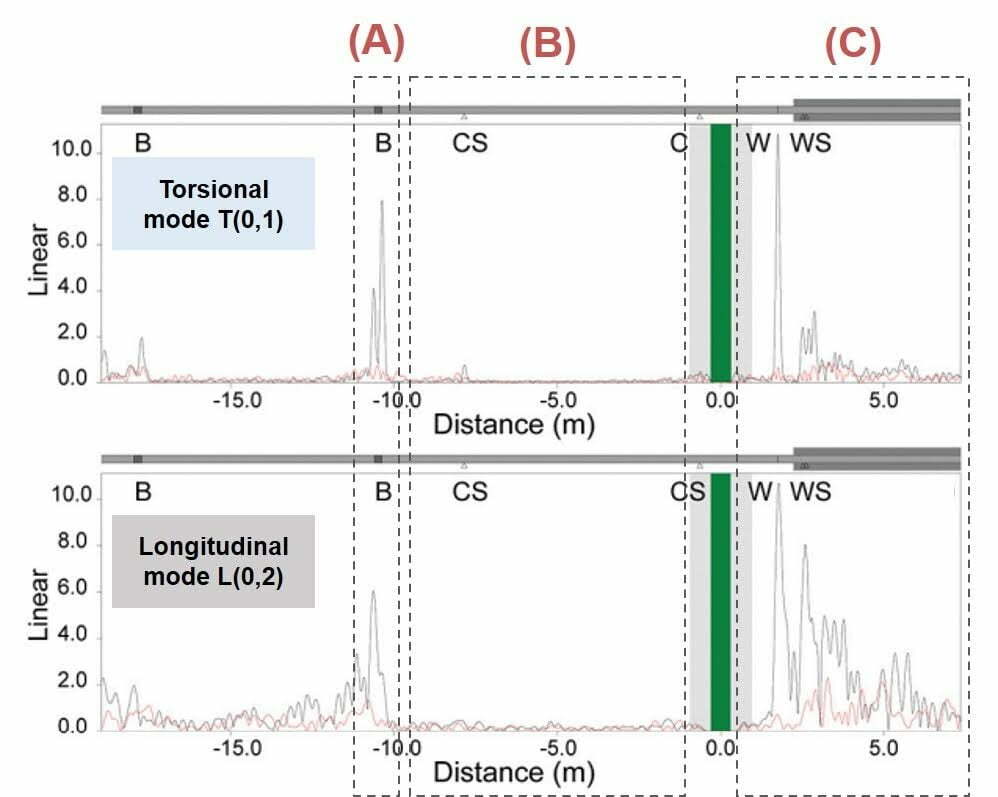
Using the Longitudinal L(0,2) can introduce larger errors due to varying speeds, and poorer signal to noise ratio (SNR) due to an additional mode and the inability to inspect pipes with liquid contents. The adjacent figure shows a comparison in inspection results between the T(0,1) and L(0,2) guided wave modes.
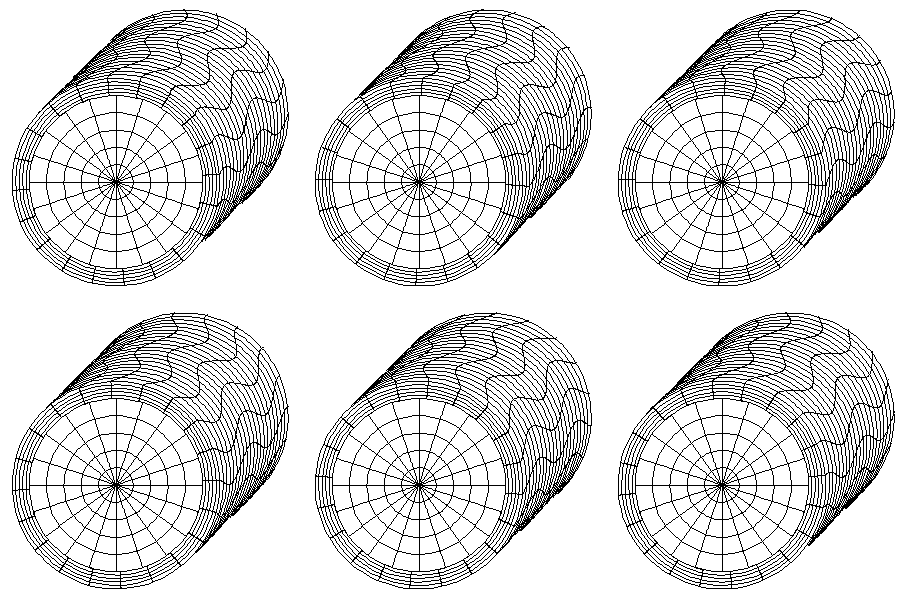
In the animation showing the Torsional T(0,1) mode propagating along a water‑filled pipe, energy does not leak into the liquid content because all of the surface motion is shear and does not couple to the liquid.
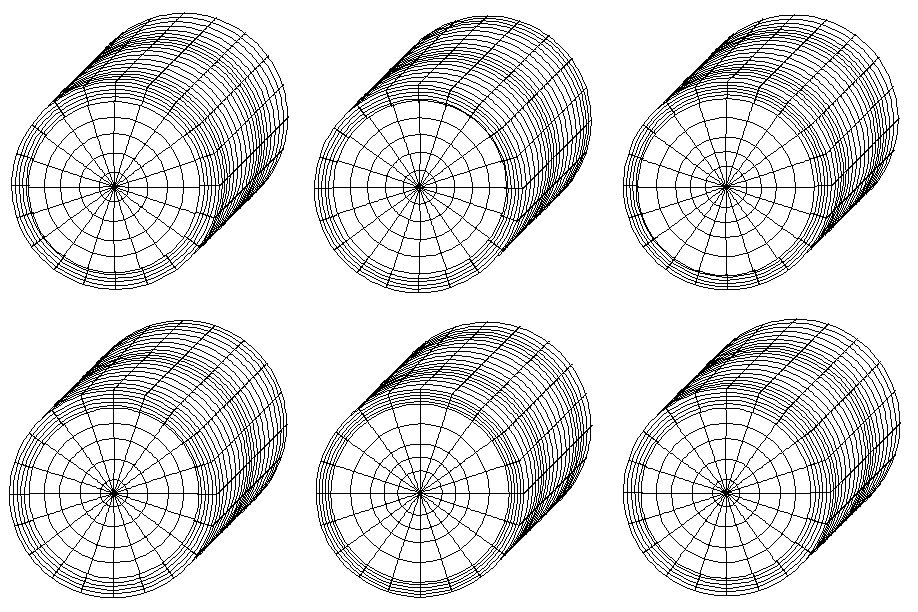
The animation showing the Longitudinal L(0,2) mode propagating along a water‑filled pipe, there is energy leakage into the liquid content because there is out of plane motion at the pipe surface. This energy leakage reduces the range and decreases the SNR due to the waves travelling through the liquid and re‑entering the pipe.
Torsional T(0,1) mode
Longitudinal L(0,2) mode
Although GUL Screening uses the T(0,1) for almost all of inspection applications, the system is still capable of using the L(0,2) mode for development purposes and this functionality is available to inspectors in the field.
Two areas where L(0,2) has a theoretical advantage over T(0,1) are:
However, in practice, T(0,1) results typically outperform those obtained with the longitudinal mode, even in these situations.


